

 CLOSE MENU

In this series, we highlight the work of CUNY SPH students dedicated to scholarship, advocacy, and research in the field of sexual and reproductive health and justice.
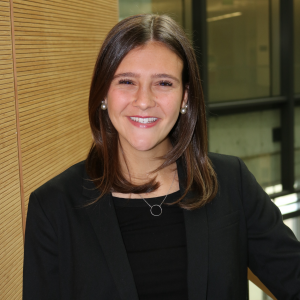
A public health researcher dedicated to examining how structural inequities affect access to sexual and reproductive health care, Carolyn Brown-Kaiser, MPH (she/her) joins CUNY SPH’s fall 2026 doctoral cohort as well as the Sexual and Reproductive Justice (SRJ) Hub, where she will explore global health, gender equality, and sexual and reproductive health and rights issues as a doctoral research assistant.
Brown-Kaiser earned her MPH with a concentration in maternal and child health (MCH) from George Washington University. During her program, she worked for the MCH Center of Excellence as a graduate research assistant, honing skills in study design, data analysis, and program implementation. For her graduate thesis, Brown-Kaiser administered a national survey to assess burnout and well-being among MCH professionals in a post-Dobbs landscape. She also contributed to the development of an online public health history course, helped launch the MCH Leadership Training Program, and served as a teaching assistant for undergraduate courses. Following graduation, Brown-Kaiser joined UMass Chan Medical School as a research analyst, where she evaluated the 2022–2027 Medicaid 1115 Demonstration Waiver.
We spoke with her about her decision to attend CUNY SPH and how family inspired her career focus.
Why did you choose CUNY SPH for your PhD program?
I chose CUNY SPH for my PhD largely because of the SRJ Hub and the amazing faculty that’s engaged with the SRJ Hub. A lot of their research aligned with my interests, like HPV vaccine hesitancy, medication abortion, examining contraceptive preferences, and pregnancy intentions. I also really think the SRJ Hub was unique when I was examining different programs because I think it’s one of the few hubs that really tries to emphasize reproductive justice and acknowledges the work of the Black women who started this movement. We have the amazing Lynn Roberts at CUNY SPH as well. I’ve been reading her work since I was an undergrad student, and that really drew me to CUNY SPH. Given my interests in sexual and reproductive justice, having such amazing trailblazers in the field was a really good sign for me that this would be a good fit for my PhD. Another thing that I really like about CUNY SPH is the emphasis on urban health. I did my master of public health at GW in Washington, D.C. and I really enjoyed getting to implement projects in the city and just get a deeper appreciation for the city. So CUNY SPH being in Harlem was a big draw to come here for my PhD.
What originally drew you to a career in public health?
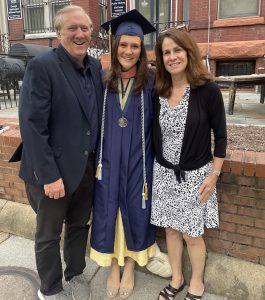
I was drawn to public health largely because of my parents. I grew up outside of Washington, D.C. and my parents’ work was in advocacy and human rights law. I think naturally I was intrigued by public policy and social justice. But then, when I got to middle school and high school, I discovered, unlike the rest of my family, that I really loved the hard sciences. I loved chemistry. I loved biology, and I was thinking about, as a high school student, not knowing much about the opportunities in the public health field, how I could combine my love for the humanities and social justice with my passion for science. I initially thought I was going to be some type of lawyer who was involved in scientific patents, but then when I got to college, I discovered public health. It was this light bulb moment where I realized this is the perfect opportunity to combine my passions for social justice and science. It really was the perfect intersection of my interests, so I became a global public health and biology double major at the University of Virginia.
What led to your career focus in SRHR?
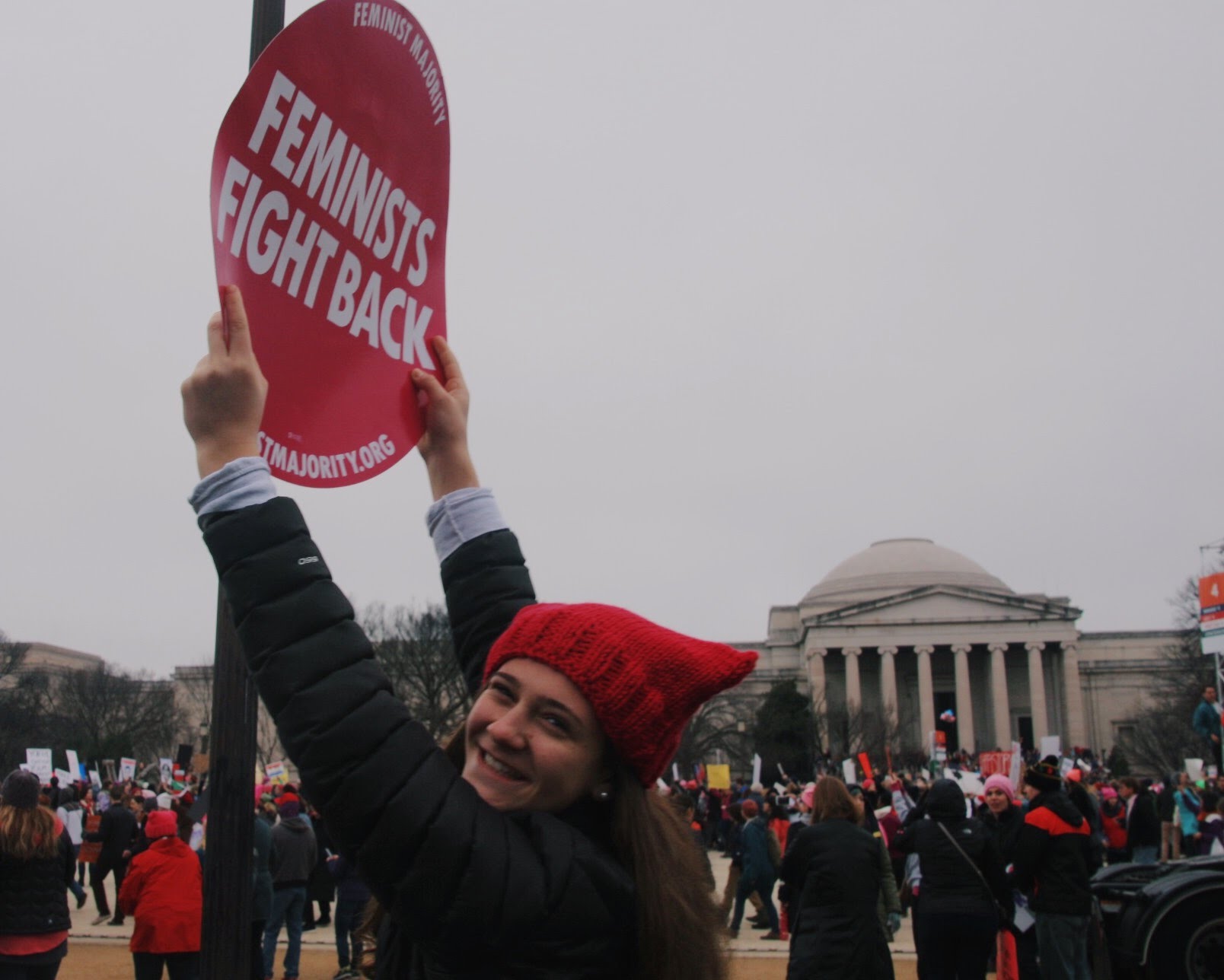
I think finding public health was truly a pivotal moment in my personal and professional career, and I really could not imagine being in any other field than sexual and reproductive justice. What drew me to that is my family. I have a lot of pride in the work that my family does. My maternal grandmother went to CUNY. She was born and raised in Brooklyn, and she was one of three female students in her graduating law class in the 1950s, and truly was a feminist before the word was even invented. That mindset of striving for women’s rights and equality, or just gender equality more broadly, was passed along from my grandmother to my mom, to my sister and I. As I grew up outside of Washington, D.C. and continued to see the attacks on women from the White House in 2016, I felt very urged to take action, and so I participated in the first Women’s March on Washington during high school. That really ignited a passion for sexual and reproductive justice, and trying to advocate for gender equality, but also health equity, racial equity, and really bringing an advocacy framework into my potential career. That really brought me into sexual and reproductive justice, and I could not imagine myself in any other field.
What are you most excited about in your studies and work at CUNY SPH?
I am most excited about conducting mixed methods research at CUNY SPH. I think for a lot of advocacy research, we need the data and numbers to back up arguments that we’re bringing to policymakers. It really is the human stories that illuminate the data and can provide a compelling argument. My goal is to conduct mixed methods research that pairs that data with human stories, and hopefully, ultimately expands access to sexual and reproductive care. I’m really excited to continue learning in my PhD courses about all these different applied methods for biostatistics and epidemiology, but also to engage in qualitative research as well, and really get advanced training in this PhD program to bridge the gap between qualitative and quantitative research, and produce really groundbreaking mixed methods research. Specifically with the SRJ Hub, I’m so excited to be starting to engage policymakers in New York. Coming to the state of New York, there’s still a lot of work to do in sexual and reproductive justice, but we have policymakers working with the SRJ Hub who are really eager to hear what work we are doing and support it. That’s something that is novel and unique to me, so I’m really excited to be able to, hopefully, one day produce research that impacts New York State policy and expands access to reproductive and sexual health care.