
 CLOSE MENU
SRJ Hub: Initiatives
Byllye Avery SRJ Professorship
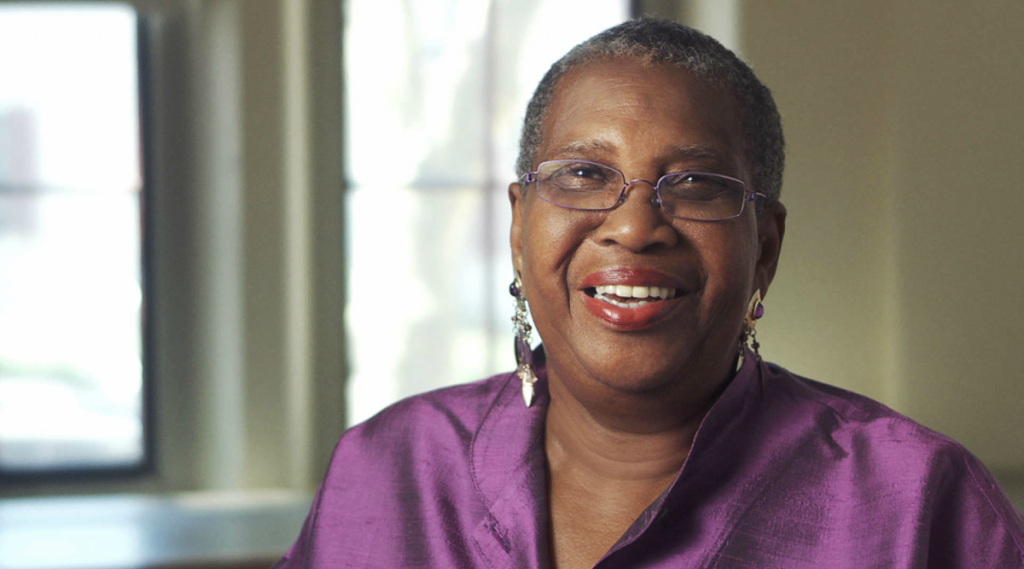
Named for the incomparable Byllye Avery, a pioneer in women’s health, thought leader in Reproductive Justice, and founder of the Black Women’s Health Imperative, this professorship will centralize SRJ programming, research, and scholarship at the school. The program also focuses on leadership development with an emphasis on challenging political environments and anti-evidence trends. This will empower the next generation of public health leaders to dismantle barriers and proliferate justice. Learn more about this endowed professorship.
SRJH Concentration at CUNY SPH
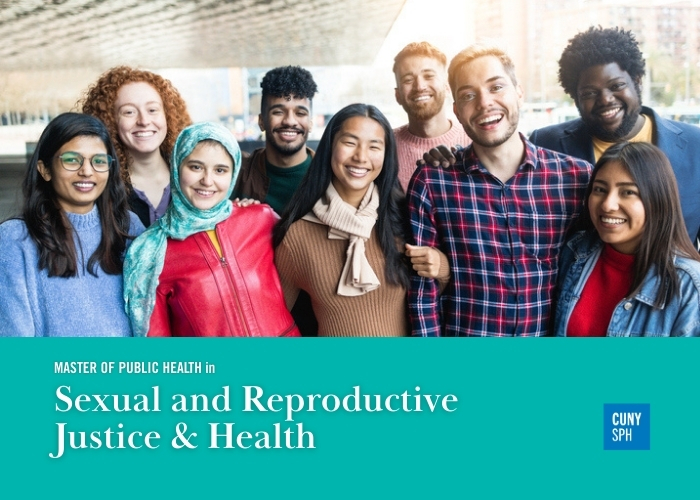
The Sexual and Reproductive Justice Hub (SRJH) concentration at CUNY SPH will prepare students to address critical issues in sexual and reproductive health (SRH) through a public health justice-centered, interdisciplinary approach. It provides MPH and PhD students with an understanding of the socio-historical and political contexts that have and continue to shape related health outcomes across the lifespan, as well as a foundation for research and programmatic activities in maternal, child, reproductive and sexual health. CUNY SPH embraces a holistic approach to sexual and reproductive health within an SRJ framework that recognizes the diversity of human sexual expression, relationships, and family structures; promotes informed, healthy, respectful, and responsible choices, free from coercion; and supports increased access to elective preventive, screening, treatment, and support services.
Advancing SRJ in an Era of Declining Multilateralism
The UN80 Initiative is a major UN reform effort launched around the organization’s 80th anniversary. Its goal is to improve efficiency, coordination, and impact across the UN system, partly in response to funding pressures and a changing global environment.
A key part of this reform effort is examining whether certain UN entities should be restructured or even merged to function more cohesively. One of the most consequential proposals under UN80 is a potential merger of the United Nations Population Fund (UNFPA), the UN’s agency for sexual and reproductive health and rights, with UN Women, the UN’s agency focused on gender equality and women’s empowerment.
CUNY SPH’s Sexual & Reproductive Justice Hub partners with researchers and activists around the world to produce timely data and analysis to inform advocacy and policy making around UN80. These include:
The BMJ-CUNY SPH Collection on Protecting Global Sexual and Reproductive Health and Rights (SRHR), prepared in partnership with one of the world’s leading peer-reviewed medical journals and featuring authors from 10 countries. The articles provide rigorous analyses and essential insights on strategic actions and civil society efforts to protect global SRHR, revealing the legal, fiscal, and institutional tactics of anti-rights movements and equipping advocates and policymakers with a clearer understanding of the landscape.
A series of country studies prepared in partnership with Feminist Cross-Coalition UN80 Working Group national gender and SRHR experts demonstrate the many ways UNFPA and UN Women operate in different contexts, what national stakeholders fear could be lost in a merger, and what they want done instead to improve SRHR and gender equality in each country. Read studies from India, Nigeria, Philippines, Dominican Republic (English and Spanish), Colombia (English and Spanish), and Egypt (English and Arabic).
A This cost-benefit analysis of the proposed UNFPA–UN Women merger prepared in partnership with researchers at the Feminist Cross-Coalition UN80 Working Group and Plaksha University in India outlines key risks, opportunities, and implications for gender equality and sexual and reproductive health and rights globally.

Research
Research supported by the SRJ Hub focuses on topics including:
- The role of environmental exposures in poor maternal child health outcomes
- Accurate environmental impact statements prior to approving industrial sites in overburdened neighborhoods
- Physician experiences treating patients with pregnancy complications in abortion ban states
- The integration of reproductive health services in primary care, including the role of long-acting reversible contraception (LARC)
- Study of East Harlem adolescents and their life goals in the context of personal relationships, risk of pregnancy, and sexually transmitted infections (STIs)
- Evaluation of a physician training program for advocacy around abortion and other reproductive health issues
- Analysis of the repeal of longstanding regulations requiring the inclusion of women and “minorities” in research
- Analysis of the realignment of the multilateral system of gender justice
Click here to view select publications by SRJ Hub faculty members.

A Global Feminist Partnership: From 16 to 365 Days of Activism to End GBV
The Global 16 Days of Activism Against Gender-Based Violence Campaign is a powerful, decades-long initiative that unites feminist movements worldwide to confront and end gender-based violence. Now hosted by the Sexual & Reproductive Justice Hub at CUNY SPH, the campaign continues to spotlight the root causes of GBV and amplify pathways to justice and prevention. Grounded in community-driven advocacy and scholarship, the campaign centers the voices and leadership of women of color and gender-diverse people globally.

Expanding Medication Abortion on College Campuses: An Advocates Guide
Making medication abortion (MAB) easier to access on college campuses is an important step toward supporting students’ health, well-being, and reproductive autonomy. Many college students face real challenges when trying to get abortion care – from not knowing where to go, to not being able to afford it. These barriers are often even greater for students from low-income families, immigrant backgrounds, communities of color, and others who already struggle to get the healthcare they need. To help close these gaps, some states have started passing laws that require public colleges to provide MAB services, refer students to care, or prepare to expand what they provide.
This guide was developed by researchers in the Sexual and Reproductive Justice Hub in partnership with youth advocates, state public health and policy institutions, college stakeholders, and implementation experts to help advocates in other states to expand MAB access on their college campuses.
For more information, contact Dr. Meredith Manze at Meredith.manze@sph.cuny.edu.
