
1 Year MPH in Community Health

What is the MPH in Community Health?  

DELIVERY METHOD:  FULLY ONLINE
ENROLLMENT TYPE:  FULL-TIME
SCHOLARSHIPS AVAILABLE

The MPH in Community Health program prepares students to promote health in urban communities using social and behavioral sciences. Students learn to plan, manage and evaluate public health programs aimed at reducing social and behavioral threats to community health in a social justice framework. The curriculum addresses the social determinants of disease and health inequalities with a corresponding emphasis on structural theories of change.

The 1 Year MPH is a rigorous, accelerated program for driven professionals who want to jump start their careers with a public health degree. It delivers the full curriculum of the traditional 2 Year MPH, but in just three semesters (summer, fall, and spring) at a higher level of intensity. It is not recommended students work full-time while pursuing this program.

Virtual Info Sessions

Join us at an upcoming virtual info session to talk to admissions staff and get answers to all of your questions.

Connect with the CUNY SPH Admissions Team

Text: (646) 664-1366
Phone: (646) 664-8355
Email: admissions@sph.cuny.edu
Chat with us 1-on-1: Book a meeting
Upcoming admissions events: Join us!

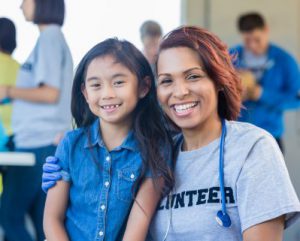
Volunteer doctor and child at community health fair

Request info on applying to the 1 Year MPH in Community Health

Loading...

Is the 1 Year MPH in Community Health right for me?

The accelerated program is designed for students who want to advance health equity in urban communities through community engagement, program planning, and public health leadership. The 1 year format delivers the full MPH curriculum in three-semesters with a summer-only start. Full-time employment is not recommended during the program.

What will I learn in the MPH in Community Health program?

With a curriculum deeply rooted in social justice, students are equipped with the skills to tackle the root causes of health inequalities while driving impactful structural change by addressing community health issues with practical solutions alongside fellow interdisciplinary health advocates.

What can I do with an MPH in Community Health?

Graduates work in a variety of organizations across public and nonprofit sectors in New York and beyond, including service, advocacy and healthcare organizations as program managers, physicians, policy specialists, communications specialists and in other facets of public health program administration.

laptop icon

How to apply: Requirements & SOPHAS deadlines for the MPH in Community Health  

Admissions Requirements

  1. Completed SOPHAS application
  2. Undergraduate degree from an accredited university with GPA (overall and major) of at least 3.5 preferred. Significant relevant experience (3+ years in the field) may be considered if GPA is < 3.5. Admission is not guaranteed.
  3. Personal statement/statement of purpose (recommended length is 500 words)
  4. Background in the field: paid or volunteer experience in public health or related field
  5. Resume
  6. Two Letters of recommendation
  7. TOEFL scores are required if language of instruction for prior degrees was not English
  8. Transcript evaluation from WES or ECE for foreign transcripts.

Application Deadline

  • The application deadline for a Summer 2027 start is March 1, 2027. 

Jobs and Expected Salaries

Graduates work across public, nonprofit, and community-based organizations in New York and beyond, including the NYC Department of Health and Mental Hygiene, the U.S. Department of Veterans Affairs, Public Health Solutions, Planned Parenthood, and many others. They pursue careers in roles such as Medical and Legal Analyst, Federal Programs Project Coordinator, Research and Development Assistant, State Policy Specialist, and more. Depending on experience, location, and position, salaries can range from $35k to $75/year (Source: Bureau of Labor Statistics).

Alumni Outcomes

See our alumni outcomes for the MPH in Community Health.

This data was collected via surveys of CUNY SPH alumni one year after graduation from 2016 to 2024. See more program outcomes here.

Financial aid icon

Financial Aid

Please see our Office of Financial Aid page for information on loans, scholarships, and other financial aid related issues.

Curriculum icon

Curriculum: Courses I’ll take in the MPH in Community Health program

Foundational Knowledge (0 credits) PUBH 601 Foundations of Public Health Knowledge* 
Core Coursework (15 credits) PUBH 610 Introduction to Health Systems, Policy, and Management
PUBH 611 Health Equity, Communication, and Advocacy
PUBH 612 Designing and Evaluating Public Health Interventions
PUBH 613 Designs, Concepts, and Methods in Public Health Research
PUBH 614 Quantitative and Qualitative Data Analysis Methods in Public Health Research
Required Coursework (12 credits) CHSS 622 Community Organizing to Advance Health and Social Justice
CHSS 623 Applied Mixed Methods in Community Health Research
CHSS 624 Community Health Program Planning, Evaluation, and Sustainability
CHSS 625 Advanced Seminar on Intersectoral Partnerships
Elective Coursework (9 credits) Three (3) electives chosen in consultation with faculty advisor
Practice Experience (3 credits) CHSS 696 Community Health Practice Collaborative I
Culminating Experience (3 credits) CHSS 698 Community Health Practice Collaborative II
Total Credits Required 42

*Students who have a CEPH-accredited undergraduate or graduate degree in public health can be waived from PUBH 601 by submitting a Course Waiver Request.

Course sequence icon

Recommended course sequence

The 1 Year program must be completed in three consecutive semesters, and students must begin in the summer.  

Year 1 Summer (12 credits) PUBH 613: Designs, Concepts, and Methods in Public Health Research
PUBH 611: Health Equity, Communication, and Advocacy
PUBH 610: Introduction to Health Systems, Policy, and Management
PUBH 612: Designing and Evaluating Public Health Interventions
Year 1 Fall

(15 credits)

PUBH 601: Foundations of Public Health Knowledge (0 credits)
CHSS 696: Community Health Practice Collaborative I
PUBH 614: Quantitative and Qualitative Data Analysis Methods in Public Health Research
CHSS 623: Applied Mixed Methods in Community Health Research
CHSS 625: Advanced Seminar on Intersectoral Partnerships
Elective I
Year 1 Spring

(15 credits)

CHSS 698: Community Health Practice Collaborative II
CHSS 622: Community Organizing to Advance Health and Social Justice
CHSS 624: Community Health Program Planning, Evaluation, and Sustainability
Elective II
Elective III

Competencies for MPH in Community Health 

Evidence-based Approaches to Public Health
  • Apply epidemiological methods to settings and situations in public health practice
  • Select quantitative and qualitative data collection methods appropriate for a given public health context
  • Analyze quantitative and qualitative data using biostatistics, informatics, computer-based programming and software, as appropriate
  • Interpret results of data analysis for public health research, policy or practice
Public Health & Health Care Systems
  • Compare the organization, structure, and function of health care, public health and regulatory systems across national and international settings
  • Discuss the means by which structural bias, social inequities and racism undermine health and create challenges to achieving health equity at organizational, community and systemic levels
Planning & Management to Promote Health
  • Assess population needs, assets, and capacities that affect communities’ health
  • Apply awareness of cultural values and practices to the design, implementation or critique of public health policies or programs
  • Design a population-based policy, program, project or intervention
  • Explain basic principles and tools of budget and resource management (“Resource management” refers to stewardship (planning, monitoring, etc.) of resources throughout a project, not simply preparing a budget statement that projects what resources will be required.)
  • Select methods to evaluate public health programs
Policy in Public Health
  • Discuss the policy-making process, including the roles of ethics and evidence (This competency refers to technical aspects of how public policies are created and adopted, including legislative and/or regulatory roles and processes, ethics in public policy making, and the role of evidence in creating policy.)
  • Propose strategies to identify stakeholders and build coalitions and partnerships for influencing public health outcomes
  • Advocate for political, social, or economic policies and programs that will improve health in diverse populations (This competency refers to the ability to influence policy and/or decision making, such as through stakeholder mobilization, educating policy makers, etc. Ability to argue in support of (or in opposition to) a position, as in a standard debate, is not sufficient. Students must produce a product that would be part of an advocacy campaign or effort (e.g., legislative testimony, fact sheets, advocacy strategy outline, etc.).)
  • Evaluate policies for their impact on public health and health equity
Leadership
  • Apply leadership and/or management principles to address a relevant issue (Such principles may include creating a vision, empowering others, fostering collaboration, and guiding decision making.)
  • Apply negotiation and mediation skills to address organizational or community challenges (“Negotiation and mediation,” in this competency, refers to the set of skills needed when a common solution is required among parties with conflicting interests and/or different desired outcomes. Such skills extend beyond the level of negotiation required in a successful intra-group process; effective communication within a work group or team is more closely related to competency)
Communication
  • Select communication strategies for different audiences and sectors
  • Communicate audience-appropriate (i.e., non-academic, non-peer audience) public health content, both in writing and through oral presentation
  • Describe the importance of cultural competence in communicating public health content
Interprofessional and/or Intersectoral Practice
  • Integrate perspectives from other sectors and/or professions to promote and advance population health (This competency requires direct engagement (in-person or online) between the student and an individual or individuals in a profession or sector other than public health; students must combine the external sector/profession’s perspective and/or knowledge with their own public health training to complete a task, solve a problem, etc.. Role-playing, in which public health students assume the identity of an individual from another profession or sector to which they do not already belong, is not an acceptable substitute for actual engagement with an individual or individuals from a profession or sector outside of public health.)
  • Apply a systems thinking tool to visually represent a public health issue in a format other than standard narrative (Systems thinking tools depict or map complex relationships, demonstrating, for example, how component parts of a system interact with and influence one another. Examples include causal loop diagrams, systems archetypes, network analyses, and concept maps. Logic models and evidence tables are not sufficient to address this competency.)
Systems Thinking
  • Apply a systems thinking tool to visually represent a public health issue in a format other than standard narrative (Systems thinking tools depict or map complex relationships, demonstrating, for example, how component parts of a system interact with and influence one another. Examples include causal loop diagrams, systems archetypes, network analyses, and concept maps. Logic models and evidence tables are not sufficient to address this competency.)
Environmental Sciences
  • Apply concepts from relevant scientific disciplines, such as toxicology and physiology, to anticipate effects of environmental, occupational and nutritional exposures on both human health and overall planetary health

Concentration Competencies:

  1. Discuss socially just and culturally responsive principles and strategies to community organizing, community health assessment, program planning, implementation, or evaluation activities
  2. Engage with communities to assess health problems and inequities, and propose actionable solutions
  3. Critique and analyze the interdependency of structures and systems that shape health in complex and dynamic ways
  4. Develop research or an evaluation plan and analytic approach that will inform solutions to community health issues
  5. Evaluate the roles that diverse sectors and interdisciplinary collaborations can play in community health initiatives
  6. Analyze how structural bias, social inequities, poverty, and/or racism undermine health and health equity
scrollToTop