 CLOSE MENU

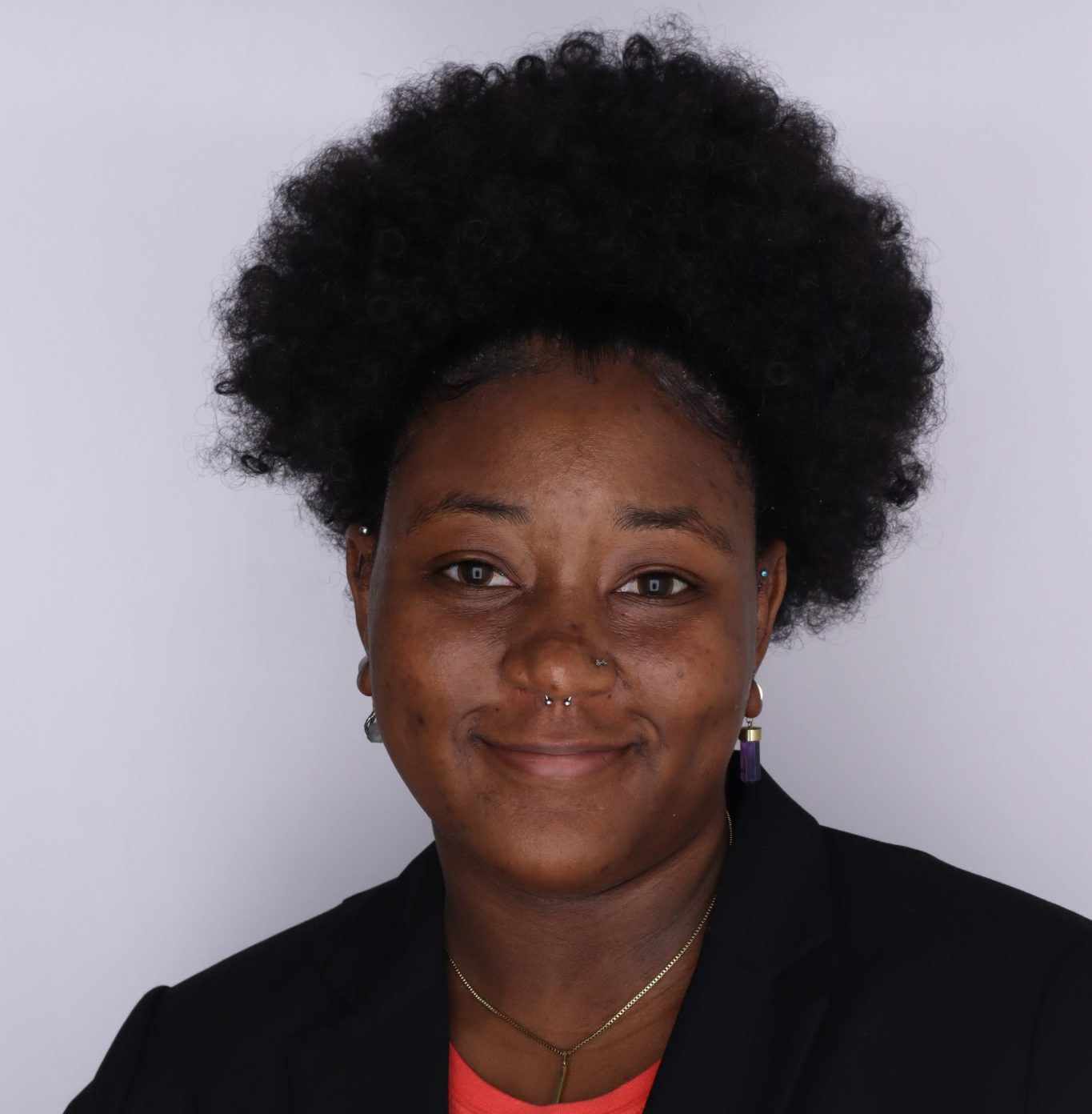
Ambrosia Beckford is part of the first cohort of students to participate in the Sexual and Reproductive Justice & Health (SRJH) MPH curriculum. From undergraduate degrees at Brooklyn College and an MPH at CUNY SPH to working with the CUNY SPH Foundation and Sexual & Reproductive Justice (SRJ) Hub, CUNY has been a constant thread in Beckford’s education, helping her connect her medical anthropology background to her goal of working in SRJH.
Through SRJ Hub and Community Health & Social Services (CHASS) events and courses, Beckford built connections with faculty, including Deborah Kaplan, Meredith Manze, and Spring Cooper. This led to research opportunities on projects evaluating reproductive health access for college students and exploring how mainstream media frames contraception and abortion access post-Dobbs.
Drawn to public health from personal experience and a desire to put her BA in anthropology and BS in public health into action, Beckford is taking what she learned at CUNY SPH into the real world. Ahead of graduation next month, we talked with her about her experience in the SRJH curriculum:
What led to your interest in public health and specifically SRJH?
I was born in Jamaica, where there are more churches than hospitals. When my mom was pregnant with me, she spent the first twenty-four hours of labor unable to get to a hospital. So, she literally just went to bed until she could find someone to take her the next morning. I think about how she could have died. That’s really where the interest in sexual and reproductive health and justice started for me.
The public health piece came together in undergrad, where I was studying medical anthropology and eugenics and sterilization, particularly among Black and brown migrant women. A few Brooklyn College faculty pointed me toward public health because of my interest in exploring an anthropological lens on power. I started researching graduate programs where I could bring ethnography and anthropological storytelling into applied public health.
CUNY SPH Associate Professor Emma Tsui’s research caught my eye because it felt like that intersection. I was really interested in how she used ethnographic research, especially since we both came from similar academic backgrounds in behavioral sciences. I came here knowing I wanted to focus on this, and so it helped that the SRJ Hub existed and that faculty were doing research I was interested in.
How did you get involved with the SRJH work you’ve done here?
Dr. Deborah Kaplan’s Maternal, Child, Reproductive and Sexual Health in Context course was my first introduction to SRJ at CUNY SPH. She played a major role in shaping my interest in the field and was the reason I attended my first SRJ conference, Anarcha, Lucy, Betsey: Day of Reckoning, where I got to see Associate Dean Lynn Roberts speak.
I also used SRJ Hub and CHASS events as a launchpad to connect with faculty. That’s how I started doing abortion access research with Associate Professor Meredith Manze, who confirmed that the skills I had were very transferable to SRJ work and research. I think that’s something more students need to know: if you don’t have the skills yet, the faculty are willing to teach you. You just have to reach out and put yourself out there.
What have you enjoyed most about the SRJH curriculum courses?
The courses have made a real difference. They’re intimate, so they give you space to actually process and discuss what you’re learning with your peers. I’ve always leaned toward the applied knowledge side of things. Not just understanding what’s happening, but what it looks like in practice, from the macro to the micro level, and what the impacts are. The courses push you to think that way and are really complementary.
In the legal and policy course, we got into what access looks like in politics, in hospital settings, and in actual lived experience. We talk about “access” so much in public health, but this course showed how we can underestimate just how deep and interconnected it really is. In the leadership course, hearing weekly from reproductive justice leaders about their career trajectories and challenges was really reaffirming and humanizing. As grad students, we put pressure on ourselves to have our careers figured out, and the course shows you that it’s okay not to have everything figured out right now. It’s powerful to show students that things in the world may be going sideways, but people have always been doing this work and continue to do it. I think that reminder is one of the best parts of both classes.
How do you feel the SRJH curriculum has contributed to your experience at CUNY SPH overall?
The SRJH classes I’ve taken gave me the confidence I don’t think I had before to go out and do something with what I’ve learned. I came in with theoretical knowledge, experience with research and primary sources, and a strong sense of what I cared about. But translating that into practice can be difficult. Being able to do SRJ-focused research with professors alongside these courses reinforced that even more. Even without the research experience, the classes alone would have made a difference. I know what I’m talking about now. I have the knowledge, and I can put it into action.
As part of the first cohort to take SRJH curriculum courses, what do you hope future students take from this?
Outside of the knowledge itself, I hope they gain confidence. We’re one of the rare schools in New York doing this work, and the curriculum gives you the tools to back up what you’re learning. A lot of times, you can sense that injustices are happening, but you don’t have the language or skills to address it yet. This curriculum gives you that.
I hope future students can sit in that confidence, understanding it’s okay to not have everything figured out while knowing this is exactly what they want to do and that they’re gaining the skills to discuss it. I think that’s really what’s important because once you have the knowledge, it’s easier to build a network and pass it along.
What are you looking forward to after graduation?
I’m going to rest! The original plan was to go straight into a PhD program, but I’ve been going continuously since high school. Undergrad, a year or two off to work, and then straight into grad school. I think it’s actually one of the biggest things we learned in the curriculum, the importance of taking time to rest and recuperate in order to do the work.
Then, in six months to a year, I’d love to be at an SRJH organization doing the work I’ve always wanted to do.